• Skip to main content

Bobbi Emel

Palo Alto and Bay Area therapist

  • About the therapy
  • About Bobbi
  • Resources
  • Contact
  • Legal Stuff

Blog

3 things you MUST know about initiation and resiliency

April 4, 2011 by admin Leave a Comment

1. Initiation is a part of our legacy.

The initiatory experience of separation-ordeal-homecoming has been around as long as human beings have existed so it is a very natural part of our lives. Why was it developed? So we could have a framework for becoming resilient and able to bounce back from adversity.

2. Initiations are essential for growth.

How do we learn to be independent in life? We start out being separated from our parents by going to school. Through the ordeal of school (ordeals don’t have to be terrible; sometimes they are merely challenging), we learn about the world and ourselves, slowly gaining maturity. Graduation is a homecoming where we are celebrated for all we have learned and our new status as an adult.

As we continue life as an adult, initiatory experiences help to teach resiliency skills and to mature us even further into valued members of our “village.” While I did not want to go through the initiation of grief over the loss of my partner, I do honor and value the lessons I learned along the way that have allowed me to help others in their grief. I also learned what I need to be resilient in adversity: loving friends and family, the ability to accept the moment as it is, and the understanding that new perspectives bring. These lessons have helped me make it through tough times that followed my time of grieving.

3. Initiation brings purpose and meaning to life events.

One of the essential skills of resiliency is learning to find meaning in life events. This is what Joe discovered as he faced a new initiation in his life. The process of being separated from what we know and are comfortable with, going through some kind of challenge or ordeal, and then bringing our new knowledge home helps us identify this purpose and meaning in adversity.

Takeaway points: Initiation is a vital part of the human experience in that it helps us to grow, learn, and find new meaning in life’s challenges.

Next time: Examples of initiation experiences in movies and books.

What have you learned about resiliency through your own initiations?


Filed Under: Uncategorized

"Why me?" A framework for bouncing back from adversity.

March 31, 2011 by admin Leave a Comment

It’s natural to start asking “Why? Why me?” when we’re crossing the dry deserts that arise in life. There are never any easy answers but it’s helpful to have a framework for working through the tough times.

There is a particular resiliency framework that has been used for eons that is still helpful for us today. This process is known as initiation. Our ancestors created and honored this practice and many indigenous peoples today still use it. Initiation rites in villages are practiced to help the young people mature into adults, complete with their own unique gifts that are vital to the strength of the village. There are three parts to an initiation:

Separation

The young person is physically separated out from the tribe to face the adult world on his* own.

The Ordeal

Tribal elders often set up challenges for the young person to face which, while sometimes harrowing, elicit the person’s Core Gift and usher the youngster into adulthood.

The Homecoming

The young person returns to the village and a great celebration is held to honor his return. The tribe sings and dances with joy because a new adult has joined the village with a Gift that will strengthen and bless the tribe.


In our world, we go through initiations frequently. Some of them are good. Going off to college can be seen as an initiation. The young person is separated from her tribe (family and friends), goes through the ordeal of college and studying (which can be a mix of fun and stress), and returns (homecoming) with not only a diploma, but a new knowledge of her strengths and her Gift to bring to the world. Usually, a celebration is held to honor the new graduate.

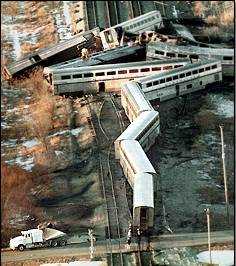
train crashOften, though, our initiations entail periods of pain in our lives. Becky Phillips endured an agonizing ritual when she lost her family members in a train crash.

Her initiation was very long as she experienced separation not only from the family members that she lost, but from the world as she knew it and from friends and family who could not possibly understand her pain.

Her ordeal consisted of raw, raking grief and the struggle to create new meaning in life and her world. Yet, somehow, she made it through.

Becky’s homecoming was also a slow process and somewhat subtle. She allowed her family to gently welcome her back as mother and wife. And now, she is providing herself with a homecoming as she celebrates the lessons that she learned along the way: how valued her late family members were to others and how they touched lives, how much she loves and cherishes the people in her life now, and how short and truly precious life really is.

Becky is now a stronger, quite gifted member of our current “village.” She has the ability to encourage us through our own adversities, having been through one of the worst ordeals one can imagine.

My client, Joe, is entering into his own ordeal as he experiences the degenerative disorder with which he has recently been diagnosed. He will likely feel some sense of separation from others as he adapts to his new reality. My hope for him, and for all of us, is that he enjoys a wonderful homecoming as he comes to terms with – and becomes gifted through – his adversity.


Takeaway points: When you face a challenge, the framework of initiation can help you view your experience as a way to not only learn to endure, but to bounce back stronger and with more focus on the Gift you bring to the world. “Why me?” then becomes “Why not me? This is an ancient and honored process.”


What about you? What kinds of initiations have you experienced? Tell us about them and especially if you are experiencing one now.


*While young men are often the ones who experience the most rigorous initiations, young women have their own types of initiations as well, usually at the onset of menses.

Filed Under: Uncategorized

Joe's resiliency: Chronic illness and the meaning of life

March 24, 2011 by admin Leave a Comment

I worked with Joe over a year ago and now he returned to see me with a new problem. He had just been diagnosed with a rare degenerative disorder that would eventually rob him of the use of his limbs as his muscles weakened over time. Joe wanted to talk about how he could prepare himself for this decline.

What am I going to do?

Joe is in his sixties and has worked in high tech for a long time. He loves it. A bit of an extrovert, he loves going to work every day with younger people who are smart, capable, and fun. He has a mentorship role with several of these co-workers that he really enjoys. And he loves to sit at his computer and solve difficult software problems as his fingers fly over the keyboard.

“What am I going to do in a few years when I can’t use my hands anymore?” Joe asked me. “And I won’t be able to drive to work. I’ll most likely be in a wheelchair . . . what then?”

Does resiliency fit with chronic illness?

I had pondered these very questions after Joe emailed me to ask for an appointment, explaining about the newly-diagnosed degenerative disorder in his message. I thought about my tenets of developing resiliency: acceptance, build a support system, gain perspective, see what is to be learned, and find the gifts in the moment. These fit well for someone who is overcoming temporary adversity, I thought, but what about someone with a chronic condition? And now, with Joe in my office, what about someone who just became aware that he has a chronic condition?

And then, as I’ve experienced so often in the therapy setting, Joe answered his own question and some of my own as well.

A new mission, a new meaning

“I can imagine,” he began, “that someday I’ll be sitting in a wheelchair in an assisted living facility. I won’t be able to move very much but my mind will still be active.” He looked up at the ceiling as he leaned back in his chair. “I think I’ll just have to develop a new mission statement for myself, a new way to make life meaningful for me.”

I was beyond moved by Joe’s response. I was really expecting him to bemoan his fate and anticipate a difficult life with disability. That’s what most of us would do. Instead, Joe combined his inner scientist’s discipline with his own optimistic personality and immediately moved into acceptance and perspective mode. He accepted what this disorder would eventually do to him and sought a new way to look at what his life would be about. And, in so doing, Joe found hope.

Will Joe always be upbeat and optimistic about his physical condition? My guess is he’ll have some pretty rough struggles along the way. But we’re already talking about his new mission statement. The disorder isn’t going to affect his ability to talk, so we’ve been discussing ways he can still mentor others and be involved in the career he loves.

Making life meaningful. Isn’t this what resiliency is all about?

resilient man in wheelchair

What is your mission statement in life? What brings you meaning and purpose?

Filed Under: Uncategorized

Old man resilience: "Let's ride motorcycles."

March 5, 2011 by admin 1 Comment

This was meant to be a commercial, but it’s oh-so-much-more. Check out the resilience of these old men as they decide to live life rather than avoid death.

Filed Under: Finding the gifts, Grief, Perspective, Resilience

Resilience: "Sometimes life hands you a new normal."

March 4, 2011 by admin 7 Comments

I asked Rebecca Phillips to follow up on my last post by telling her own story of the day that forever changed her life.Amtrak_crash

 The crash                                                                   

Twelve years ago, I thought my life was over.  Certainly, life as I had known it was over.  What had befallen my family was worse than any tragedy I could have imagined at the time: my mother, father, sister, and close family friend, off on a cross-country trip, had been killed in a train crash.

I remember it like it was yesterday: the phone jangled us awake at 4:30 a.m., a good hour earlier than my alarm was set.  Bill answered: “Hello? Oh, no! Thanks. Bye.”  He said, “That was your sister. Your parents’ train has derailed.” He turned on the television to CNN, where we saw the wreckage.  The night before, Train 59, the City of New Orleans, had encountered a semi-truck on the crossing near Bourbonnais, IL.  The truck made it through the crossing, but the train struck the trailer, which was loaded with re-bar.  The re-bar acted like ball bearings on the tracks, causing the two-engine train to leave the track, strike a siding car, and accordion into a fiery mess.  At the time, nobody knew how many were injured or killed, but as soon as I saw the TV, I knew.  I knew in my heart they were gone.


The worst of the worst

There are many holes in my memory of that time; I attribute that to the shock of the tragedy.  Several of us flew out to Illinois to deal with the situation there.  The national media pounced on the story and followed it for days.  Suddenly we were on television and on the front page of newspapers.  Details blur together.  What I do remember is the kindness shown to my family and me over and over again, in the village of Bourbonnais and in our home town.

My remaining siblings and I spent weeks cleaning out our family home; it was hard to realize that my parents would never live there again.  The youngest of seven children, I had always relished my role as the baby of the family, and I had a close relationship with my parents and siblings.  Now, I felt lost.  One-third of my family was gone.  My parents, who had guided me through the hard times in my life, could not help me through this, the worst of the worst.

Well-meaning friends and relatives did not know how to approach me anymore.   Likewise, I didn’t know what to say to them.  No, I wasn’t fine.  I still spent time at the cemetery, looking for some kind of comfort. I still burst into tears at any little thing.  I still felt a terrible weight on my chest, like I couldn’t breathe.  I still didn’t sleep well, and I ate to feed my broken heart.   My grief was exhausting, both mentally and physically.


Sometimes life hands you a new normal

I’ll be first to admit I could not face this journey on my own.  I am forever grateful for my husband’s loving patience and understanding.  I leaned heavily on my sisters, who mothered me in their own ways.  I started a journal.  I prayed and wept all the time.  I spent two years under a therapist’s care, and I used prescription antidepressants.  Still, I had nightmares on a regular basis, I rarely went out of my house, and I wondered if I would ever be normal again.  I felt I was falling apart, and I didn’t know how to stop it.

What I discovered, after I had spent some time on this path, is that sometimes, life hands you a new normal and expects you to deal with it.  Sometimes, you just have to keep moving.  At some point, I realized that my children needed their mother, and my husband needed his wife.  I needed to be needed again.  Slowly, I felt myself come back.  I smiled more often.  I could talk about my parents and sister without dissolving into tears.  I looked less into the past and more into the present.  I vowed to teach my young sons all about the family they lost.  In my newfound feelings of resolve, I found hope.  I was not the same, but I was going to be okay.

All along, my sisters and I had discovered blessings that had come from the tragedy.  Our parents, who had recently celebrated 55 years of marriage, died as they had lived — together.  Our faith assured us they were in Heaven.  Our sister who died was the only one of us who would leave no spouse or children behind.  Beloved friends and family who had lost touch over the years now contacted us because of our loss.  People recounted inspiring stories of love and encouragement – my parents and Wendy had touched so many!


Life is good

I like to say that grief is a great and terrible teacher.  Most of us live our lives as if nothing can touch us.  When death comes to us in some way, we realize how foolish we were.  Suddenly we are faced with despair; the lessons are hard, but they help us grow.  I would not wish this on anyone, but in some ways, I am glad to have gone through it.  I cherish my life and loved ones as never before, and I feel more compassionate toward others.

I believe I am stronger, but at the same time, I am also a little more fearful.  I now know that those things we think will ‘never happen to me’ can, and do happen.   I walked that path, and by the grace of God and the people around me, I made it through.  The grief that would destroy me has instead shaped me into a better person.

My family talks about life in terms of before and after the crash.  Two distinct periods separated by one horrible event.  It was an ugly time, and I really thought I might never recover.  But I did, and I’m here to say that despite its struggles, life is good.


Filed Under: Finding the gifts, Grief, Perspective, Resilience

Tragedy, grief, love and joy

February 28, 2011 by admin 1 Comment


A tale of tragedy, grief, love and joy told in snippets.


Facebook post, February 26, 2011Vergil and Leona Vant

On this day in 1944, my young parents were married. After Dad came home from the war, they were rarely apart. My parents held hands and danced in the kitchen. They approached life with a healthy dose of humor and common sense. After 55 years of living together, they died together.

Happy anniversary in Heaven to Ma and Pa. Always in my heart and in my dreams.

I’ll see you again…

Beck 


March 1999

“Do you remember Becky Vant?” my mom asked as we chatted on the phone.

“Of course! She was one of my best friends in junior high until she went to that other high school in the district,” I teased. “I haven’t seen her in years. Why do you bring her up?”

“This is just awful,” Mom began, “Becky’s parents and her sister Wendy were all killed in a train accident in Illinois a few days ago.”

“Oh my god . . . what happened?”

“A semi-truck drove onto the tracks and the train crashed into it. No one knows all the details yet.”

“I can’t believe it! I wish I knew where Becky was so I could talk with her.”


March 2010

Becky finds me on Facebook. Now Rebecca Phillips, married and with kids of her own, we catch up on the past twenty-five years and then our messages turn to our shared experience of grief.

Becky, I write, my grief after losing Ruth was so much more difficult than I ever thought it would be. How did you ever make it through after the train accident?

Oh, Bobbi, it was so hard, Becky responded. There were days when I couldn’t get out of bed, couldn’t work, couldn’t take care of my kids . . . Somehow, between my faith and the love of those around me, I’ve made it this far. But I still think about my parents and Wendy every day.


Facebook post, February 27, 2011

Becky responds after receiving 25 comments on her post

Thank you all. Every day of my life, I become more and more convinced that I am one of the luckiest people around, because I have an amazing family and a phenomenal group of friends. I love your stories and I appreciate all of your generosity and love.

Life is good.   

                                                                                 __________________________________________________


In loving memory of Vergil, Leona, and Wendy Vant. Your “lucky” daughter and sister continues to teach us that, even after tragedy, life is good.

Filed Under: Finding the gifts, Grief, Perspective, Resilience Tagged With: grief, joy, love, perspective, resilience, tragedy

Perspective

February 11, 2011 by admin Leave a Comment


I like this little video. It’s a good reminder about keeping perspective.


K7ZZXFW2JR9W

Filed Under: Perspective, Resilience

Being in the moment: Your skein of days

February 9, 2011 by admin Leave a Comment

It is good to have friends who are poets. This is what I told my friend, Eric, after I read a recent email he sent me. Eric is 46 and has had his share of adversity in the last decade, including open heart surgery when he was 39. We have often talked about the importance of staying present and how truly short life is. I asked Eric what his thoughts were about this, especially for those of us who have not had life-threatening illnesses that tend to naturally create the urgency of the moment. So here is guest blogger Eric Bellscheidt on life and being in the moment: 


You said it about this gossamer life, and every day I realize that more and more. But I tend to think it makes the days more precious. I truly do appreciate them more than I did as a young adult, even more than I did a few years ago. And we’re even talking post-heart illness. I don’t think the appreciation is simply a product of maturity or personal experience, but a realization and assessment of what is valuable in life, about what is important and precious, and maybe somewhat of a letting go and acceptance of the mortal beings we are.

I think one of the best ways to realize that every day is a gift is through our connections to life, whether they be interpersonal connections, or a communion with nature, or even a higher being. What you connect with. But it’s not what we believe in so much, but the fact that we simply believe. It’s a dedication. It is the connections that sustain and help us appreciate who we are and what we have. They hold us to this earth, gossamer strands that bind us in this life, to what we love, before we float away . . .

 I also adhere to David Lynch’s Twin Peaks philosophy of life:  Agent D.B. Cooper said every day you have to give yourself a gift, even if it’s simply a cup of good, black coffee.

 My extrapolation of this is to acknowledge the gift. Then eventually you realize that it is not the only gift of the day. A hug, a smile, a sunset. Then it dawns on you that there are more gifts coming to you throughout the day, you just have to be open to them. And finally you understand that once the string of gifts is strong enough it becomes the tapestry of your life.

 Your skein of days.


Eric Bellscheidt is a poet at heart and an editor with Microsoft by day. He is the husband of my oldest friend, Karen, and the father of two daughters. I am proud to call him my friend.

Filed Under: Perspective, Resilience

  • « Go to Previous Page
  • Page 1
  • Interim pages omitted …
  • Page 14
  • Page 15
  • Page 16
  • Page 17
  • Page 18
  • Interim pages omitted …
  • Page 20
  • Go to Next Page »

Copyright © 2026 · Infinity Pro on Genesis Framework · WordPress · Log in